
How Long Does Physical Therapy Take to Work for Common Injuries?
If you are dealing with a persistent injury, you are probably asking the most common question in rehabilitation: "How long until I feel better?" Whether it is a sharp pain when you run or discomfort that keeps you from lifting your children, waiting on a recovery that seems to stall is incredibly frustrating. You deserve a clear path forward and a realistic expectation of when you can return to the activities you love.
At Rehab With Roni, our approach toperformance, pelvic floor, and running physical therapy in Chattanooga, TN focuses on one-on-one care designed to get you back to peak performance as efficiently as possible.
Understanding the Healing Timeline for Common Injuries
Recovery time depends heavily on the type of tissue involved. Biological healing is a natural process that cannot be skipped, but it can be optimized with the right interventions.
Muscle strains often show significant improvement within two to four weeks.
Ligament sprains and ankle sprains typically require four to eight weeks to stabilize.
Tendon issues such as Achilles tendinopathy or general tendinopathy may take six to twelve weeks or longer.
Overuse injuries like shin splints or IT band syndrome vary based on training load and movement patterns.
Several factors influence your specific timeline, including injury severity, age, and overall health. The most critical factor, however, is often consistency. When you follow a personalized plan that includes targeted loading and movement strategies, your body can repair itself more efficiently.
How Performance Physical Therapy Accelerates Recovery
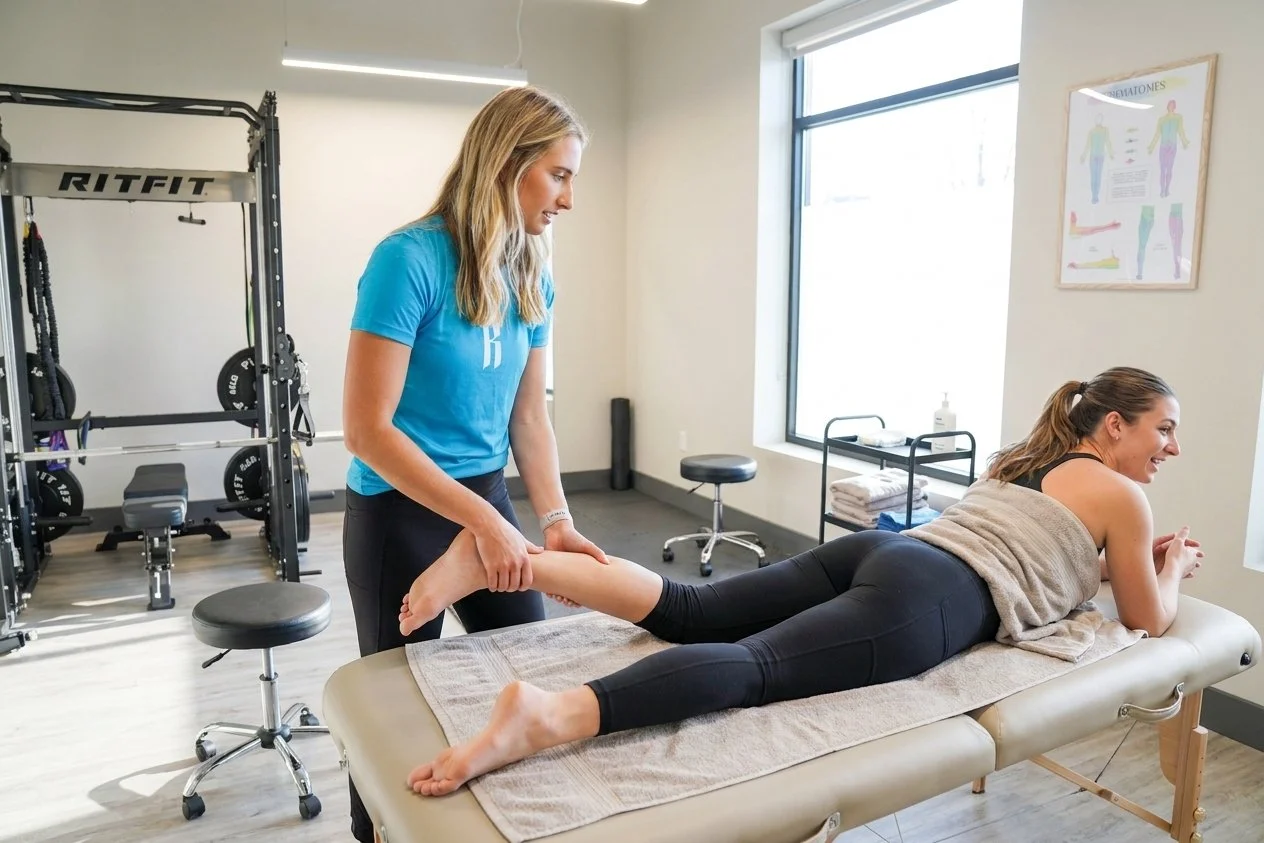
While biology sets the baseline, the quality of your care determines how quickly you move through each healing stage. At Rehab With Roni, every session is exclusively one-on-one with a Doctor of Physical Therapy, meaning you receive focused, individualized attention from start to finish.
Our approach goes far beyond a standard movement screen. We use isokinetic and dynamometer testingto gather objective data on your strength and identify muscular imbalances that may be driving your pain. By pinpointing the root cause during your initial evaluation, we eliminate the "wait and see" approach that is common in high-volume clinics.
This level of specificity allows us to adjust your program in real time, ensuring you are always progressing at the right intensity to spark recovery without triggering a setback.
Treatments That Support Faster Healing
Depending on your condition, your care plan at Rehab With Roni may incorporate a combination of the following:
Dry needling to address trigger points and reduce localized pain
Cupping and myofascial release to improve tissue mobility
Manual therapy and joint mobilization to restore range of motion
Neuromuscular re-education to retrain movement patterns
Plyometrics and return-to-sport progressions to rebuild confidence and capacity
Electrical stimulation (TENS/NMES) to support muscle activation and pain management
Combining hands-on treatment with targeted strength building often results in fewer total visits and a more durable recovery.
Recovery Timelines for Runners in Chattanooga
For the local running community, injuries like runner's knee (patellofemoral pain), IT band syndrome, and shin splints are all too familiar. Many runners worry that physical therapy means months of complete rest and no running at all.
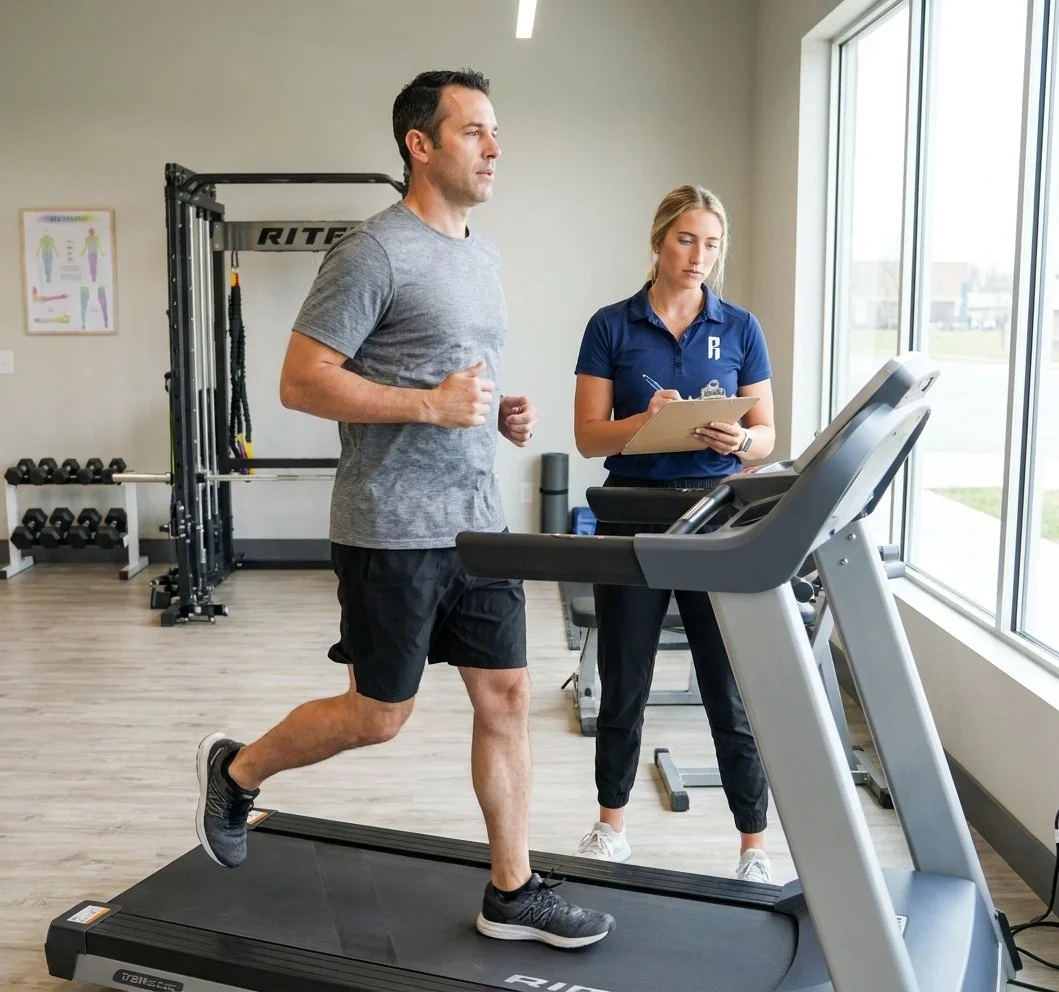
That is rarely the case. Our goal is to keep you moving whenever it is safe to do so. Through running gait analysis and a detailed running form assessment, we can often modify your technique, pace, or distance rather than stopping you entirely.
Most runners notice meaningful changes in their pain levels within three to six visits when targeted strength building is combined with gait modifications. By addressing the mechanics of how you run, we shorten the recovery window and reduce the likelihood of the injury returning when you increase your mileage.
Common Running Injuries and General Recovery Expectations
Runner's knee / patellofemoral pain: Four to eight weeks with consistent loading and gait work
IT band syndrome: Four to ten weeks depending on training volume and hip strength
Shin splints: Three to six weeks with load management and biomechanical corrections
Achilles tendinopathy: Eight to twelve weeks with progressive tendon loading
Hamstring strain: Three to eight weeks based on grade and return-to-running demands
These are general ranges. Your functional movement assessment and testing results will shape a timeline specific to you.
Healing Timelines for Pelvic Floor Rehabilitation
Pelvic health concerns such as incontinence, pelvic pain, painful intercourse, and diastasis recti are often dismissed as inevitable parts of aging or postpartum recovery. They are not. These conditions involve complex muscle and nerve interactions, and they respond well to skilled, targeted care.
Many patients begin to notice improvement in symptom management within just a few sessions of pelvic floor physical therapy. Retraining the pelvic floor muscles to respond automatically during daily and high-impact activities typically takes six to ten weeks, though this varies based on the condition and its severity.
At Rehab With Roni, our approach to pelvic health physical therapy in Chattanooga is empathetic and thorough. We use pelvic floor internal techniques alongside broader movement and strength work to address the full picture, not just isolated symptoms. Our goal is to give you the tools to manage your health long after your formal therapy ends.
Why Quality of Care Matters More Than Visit Count
In many high-volume clinics, you might spend ten minutes with a physical therapist before being handed off to a technician or aide to complete exercises independently. This model often extends recovery timelines and leaves patients feeling unsupported.
Rehab With Roni operates differently. Every visit is dedicated, one-on-one time with a specialist. This means your program is continuously refined based on how you are responding, not based on a generic protocol. Advanced modalities are applied with intention, and your progress is measured with objective tools like return-to-sport testing and dynamometer testing so you always know where you stand.
This high-quality model is designed to get you back to the activities you love, whether that is running a race, returning to the field, or simply moving through your day without pain.
Ready to stop guessing and start healing? Whether you are managing a running injury, recovering from a lower extremity issue, or seeking pelvic floor physical therapy in Chattanooga, TN, Rehab With Roni is here to guide you with focused, expert care. Reach out today to schedule your comprehensive evaluation and take the first step toward a faster, more effective recovery.
